Make the Most of It
Professional consulting tailored to meet your unique

Becoming a pilot is one of the most aspirational career goals for students in India. The profession offers prestige, high earning potential, global exposure, and the thrill of flying. However, many students and parents are confused about the exact process, eligibility, cost, exams, and career scope. If you are wondering how to become a pilot after 12th in India, this complete guide by Infostaan will help you understand everything step by step in a simple and practical way.
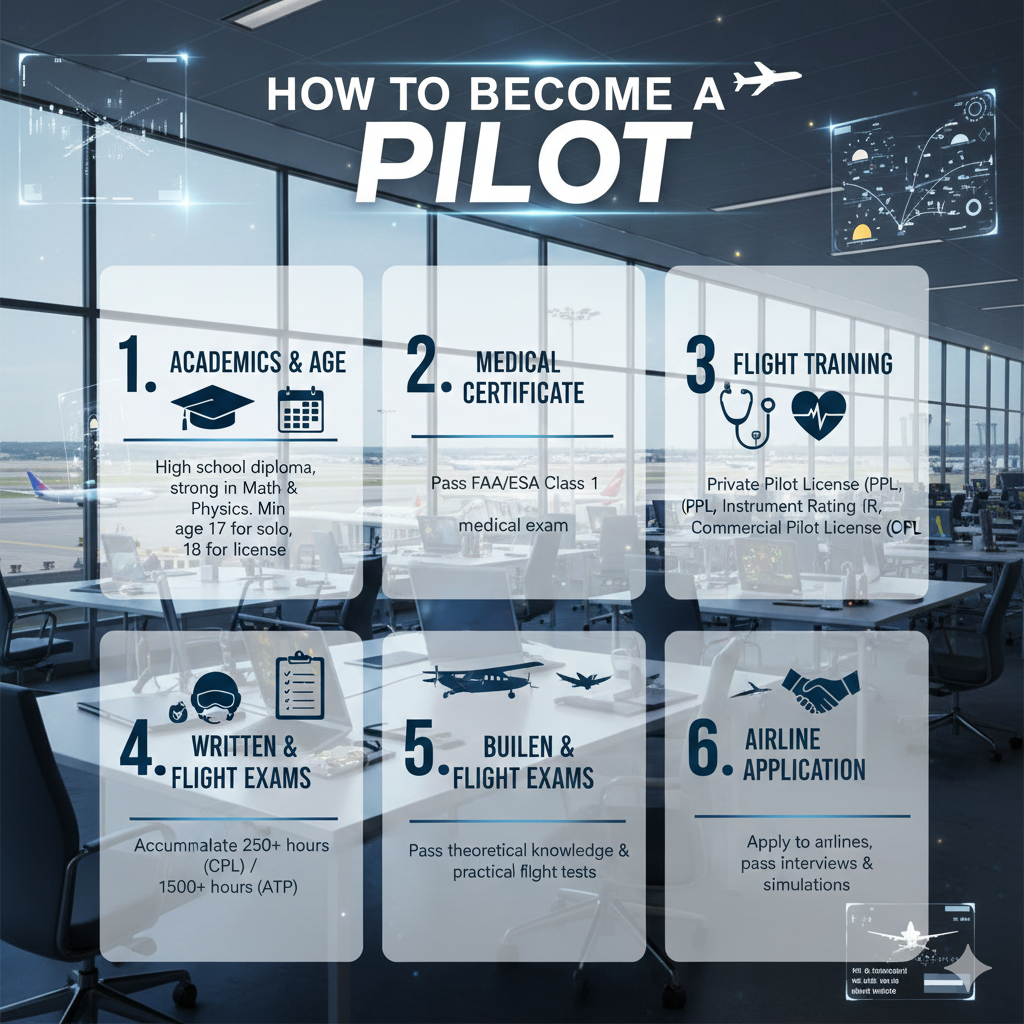
To become a pilot in India, a student must complete flying training from a recognized flying school and obtain a valid pilot license issued by Directorate General of Civil Aviation (DGCA). The journey requires academic eligibility, medical fitness, dedication, financial planning, and consistent effort.
To begin pilot training in India, a student must pass 12th standard with Physics and Mathematics as compulsory subjects. Students from Science stream are directly eligible, while students from Commerce or Arts backgrounds can still become pilots by completing Physics and Mathematics through open schooling such as NIOS. The minimum age to start flying training is 17 years, and there is no strict upper age limit, although airlines usually prefer younger candidates.
Medical fitness is a crucial requirement. Every aspiring pilot must clear a DGCA-approved Class 2 medical examination before starting training, followed by a Class 1 medical before applying for an airline job. Good eyesight (with permissible correction), overall physical fitness, and mental health are essential.
There are different types of pilot licenses, and understanding them helps students choose the right path. A Student Pilot License (SPL) is the first step, allowing you to start flying training. After gaining experience, students move to a Private Pilot License (PPL), which allows flying for personal purposes but not commercial employment.
The most important license is the Commercial Pilot License (CPL). A CPL allows you to work as a professional pilot with airlines, charter companies, cargo operators, or private aircraft owners. Most students aiming for airline careers focus directly on CPL training.
The first step is confirming eligibility by completing 12th with Physics and Mathematics and meeting medical standards. The next step is clearing DGCA medical exams, which assess vision, hearing, blood pressure, and overall health.
After medical clearance, students must choose a DGCA-approved flying school in India or abroad. Training in India is often preferred due to DGCA alignment, while foreign training can sometimes be faster but requires license conversion in India.
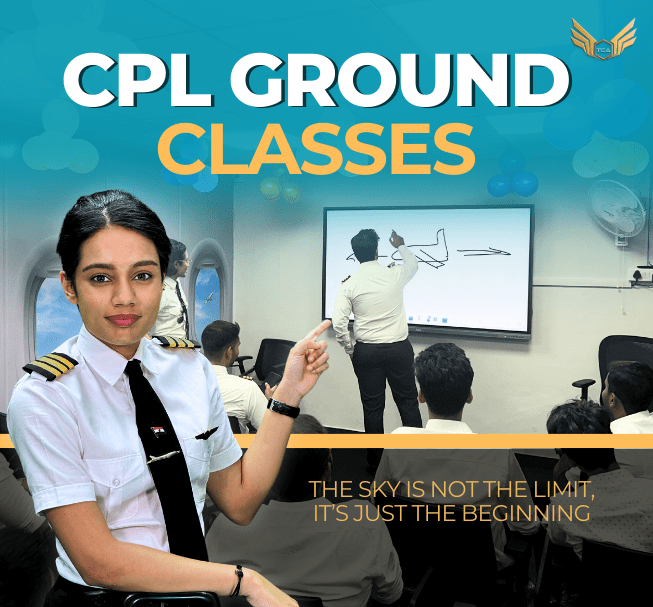
During training, students must complete a minimum of 200 flying hours for a CPL, including solo flying, cross-country flights, and instrument rating. Alongside flying, students must clear DGCA theoretical exams such as Air Navigation, Meteorology, Air Regulations, and Technical subjects.
Once all exams and flying hours are completed, DGCA issues the Commercial Pilot License. After obtaining CPL, pilots apply for airline type rating specific to aircraft like Airbus A320 or Boeing 737, which is usually sponsored or partially funded by airlines.
One of the most common questions is about the cost of pilot training. In India, the total cost to become a commercial pilot generally ranges between ₹35 lakh to ₹55 lakh. This includes flying hours, ground classes, medical exams, license fees, and basic training expenses. Training abroad can cost slightly more depending on country and exchange rates.
Although the cost is high, many students see it as a long-term investment due to strong salary potential. Some banks offer education loans for pilot training, and careful financial planning is highly recommended before starting.
Apart from Physics and Mathematics, pilots need strong problem-solving skills, decision-making ability, situational awareness, and calmness under pressure. Communication skills are extremely important, as pilots must coordinate with air traffic control and crew members in English.
Time management, discipline, and adaptability are essential because aviation is a highly regulated and safety-focused industry. Students who start developing these skills early have a smoother training journey.
The aviation sector in India is growing rapidly due to increasing air travel demand, new airlines, and expanding regional connectivity. Commercial pilots are in constant demand, especially with fleet expansions by major airlines.
A newly hired first officer in India can earn between ₹1.5 lakh to ₹3 lakh per month depending on airline and aircraft type. With experience and promotions to captain, salaries can go up to ₹6–8 lakh per month or even higher. International opportunities further increase earning potential.
Pilots can also work in cargo aviation, charter services, corporate jets, helicopter operations, and government aviation departments. Career stability improves significantly with experience and consistent medical fitness.

Many students rush into pilot training without understanding DGCA rules, medical requirements, or financial planning. Choosing a non-approved flying school or ignoring medical fitness early can lead to serious setbacks.
Another common mistake is underestimating the importance of theoretical exams. DGCA papers require focused preparation, and failing multiple attempts can delay licensing. Students should also avoid unrealistic expectations and be mentally prepared for a demanding but rewarding journey.
For students passionate about aviation, becoming a pilot is absolutely worth it in 2026. The industry outlook is positive, salaries are attractive, and global opportunities exist. However, it is not a shortcut career. It requires discipline, patience, financial planning, and strong commitment.
Students who choose aviation only for money or glamour may struggle, while those genuinely interested in flying, safety, and responsibility thrive in the long run.
Becoming a pilot in India after 12th is a structured yet achievable goal if approached with clarity and planning. Understanding eligibility, licensing, costs, and career scope early helps students avoid confusion and costly mistakes. With the right guidance, preparation, and mindset, the cockpit can truly become your future workplace.
At Infostaan, we aim to simplify complex career paths and help students make informed decisions. If aviation is your dream, start planning early, stay consistent, and move step by step toward your goal.

Professional consulting tailored to meet your unique

Reliable customer support designed to provide fast

Innovative design services that bring your creative

Comprehensive marketing strategies focused on increasing brand